
Firstly, how many neurosurgeries have you had so far and were they focused on the same part of the brain?
I have had two neurosurgeries. The first was shortly after my brain tumour was identified in 2019. Because of some tumour regrowth, I had my second neurosurgery about a year after that. Both surgeries targeted my right occipital lobe where the tumour was growing.
Tell us about what happens before and after the surgery?
At the hospital where I had my surgery, I was admitted a day or two before the operation. On the day of the surgery, you are already set up in your hospital bed and when the time is ready, someone will come and collect you and take you to the operating theatre area which is restricted to visitors. Once you are inside that area there is a smaller room where some of the surgical team including the anaesthetist will be waiting for you to do the final preparation before you go into the main operating theatre. Once the anaesthetist works their magic, you don’t need to do much else. After the surgery is done, in my case the surgery took about 6 hours, you are transferred to a more specialised high dependency unit were the nurses and doctors can focus their attention on you to make sure that you are doing ok after such a big operation. After a few days in that unit which you might be sharing with other patients who also need high levels of care, you might be transferred into a more general ward for ongoing observation.
Do you know for your surgeries whether the surgeon used a fluorescent dye or agent to help them operate and get as much of the tumour out as possible?
Yes, they did and although there was a potential cost implication, I wanted the surgery to be as successful as possible.
What was the most frustrating part of your neurosurgery experience?
One of the most frustrating things for me was the regular checks, called neuro observations, that the care team did at regular intervals straight after the surgery and for the few days after while you are still recovering in hospital. These checks are so important though to make sure that you are understanding where you are and that you can still move and have strength in your arms and legs. So, try to be patient with the nursing and other staff as they have your best interest at heart in doing those tests. The other thing is that while it doesn’t sound like a long time, and it can be different for each patient, the usual recovery time in hospital after a major neurosurgery is about five days. Boy, I was ready to get home and be in my own bed by that stage.
What did you learn about yourself from your neurosurgery experience?
The first is how much inner strength and resilience I have inside myself. While any surgery is scary, I would have to say that having neurosurgery would have to be one of the scariest experiences I have had. The second is that you have to adapt pretty quickly to your change in circumstance. After my first neurosurgery, I did not wake up properly until a whole day after the operation so two nurses very kindly and gently gave me a sponge bath in bed. While I am sure that is just part of their job, that loss in privacy was a big learning curve for me.
What support was available to you in hospital while you were recovering from the surgery?
The biggest support that was available to me was that there was a physiotherapist who was based in the recovery ward. This was helpful for me as I needed to learn new techniques for the loss of my left peripheral vision. The other person who was kind and helpful to me was a student nurse. She was very kind and made a special effort each night to make sure I got up after dinner to do my walks around the ward to help in my recovery. One night, she took me to a part of the ward where we could walk outside and get some fresh air. I will never forget that sensation after being in the ward for so many days.
What about care after hospital discharge?
Depending on the instructions from the neurosurgery team, the dressings for the surgery wounds will need to be changed daily. On the final day in hospital before discharge, one of the nurses will show how the wound dressing should be changed, this can be done at home by your carer, but my personal preference was to go to my local GP and nursing team to get the dressing changed. This is because a surgery wound can get infected, and I felt safer having my GP team check the wound daily during the dressing change. If you are going to go to the GP for your wound care, I would really recommend taking your hospital discharge notes with you so that the nurses know how best to look after you. The GP practice can take a copy of those notes and you can still bring home the original discharge notes.
Depending on how the surgery was done, you may also have staples that are holding the wound together. These staples will need to be removed and this can be done by one of the neurosurgery team at the hospital where you had the surgery. Probably a couple of weeks after the operation, you will also have a follow up appointment with the neurosurgeon to check how you are doing.
What advice would you give other patients and carers?
While the thought of having someone operate on your brain is very scary, it is important that you trust that your neurosurgery team will look after you. And I mean the whole team, from the neurosurgeon, registrars, the nursing staff, and other specialists who might come to visit you on their daily rounds.
Do you wish you had done anything differently after the first or second surgery?
Yes. At the time of my first surgery, I was working full time in a stressful job and one regret I have is that, regardless of the financial implications, I wish I had just handed in my resignation from that job to really focus on not only recovery from that first surgery but also to take the time out to really process and be at peace with the diagnosis I was given. It was quite an eye opener for me that once I felt mostly recovered after my first surgery, I went to a work Christmas lunch in the park and my colleagues told me I look so relaxed and well, it is kind of sad that it took me to have major brain surgery to really take some time out to look after myself.
You have had two surgeries so far in your brain tumour treatment, would you consider a third surgery if that was a course of treatment recommended by your treatment team? What would you need to think about before you made that decision?
Yes, I would if that was a course of treatment that my treatment team thought was the next best option.
The main things I would need to think about are which part of the brain would the surgery focus on. For instance, if the surgical team focused just on operating on the area that has already been operated on that has impacted my left peripheral vision already, I would probably be much more comfortable with that, than say an operation that might potentially or could impact on other functions that the brain controls, such as movement, speech, or memory. I would also need to take into consideration how I perceive my overall health to be. Apart from having a large tumour in my brain, I was reasonably fit and healthy at the time of my first operation, but now that I am two years down the track from that first surgery, I don’t feel quite as strong.
Also, there are still things of my past ‘normal life’ that are still important for me to maintain such as the ability to continue working as a researcher at least part time and to maintain as much quality of life as possible. So, for me, the decision would really be about trying to find the right balance that feels right to me for my quality of life rather than quantity or length of life.
Finally, were there any funny moments that you remember from your time in hospital?
Yes, I was admitted to the hospital a day or two before my first neurosurgery and breakfast had arrived. I tried to open up the pack of rice bubbles but I didn’t do it very carefully, so they spilt everywhere. The nursing and cleaning staff couldn’t believe how far the rice bubble spill went! We all had a good laugh.
Are there any practical tips that you would give other patients and carers about what to take to hospital for your surgery?
Yes, while it sounds a bit silly, although you will have been provided with surgical socks, make sure you also take something like slippers, so that when you are walking from your bed or around the ward while you are recovering that you have something on your feet.
The other main thing is to have the confidence to advocate for yourself. After the first surgery, there was one part of removing all the tubes that was very painful for me, so for my next surgery, I was more confident in telling the nursing team about that experience, and they made it so much easier and pain free for me.
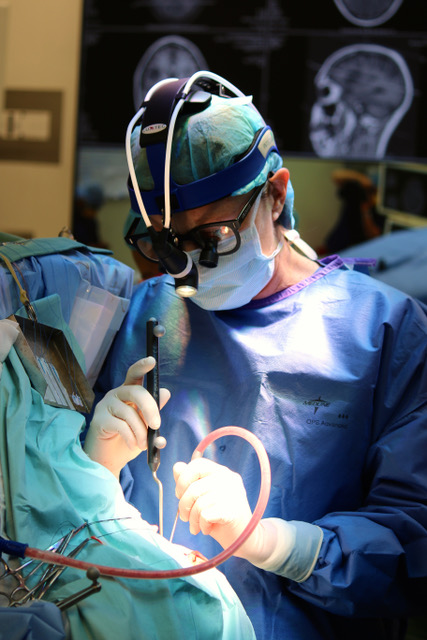
Image supplied by K. Drummond from the BT Online team to illustrate MJ’s story.