
What was one of your first signs or symptoms of having brain cancer?
I was crossing the road one day after work. It had been a busy and stressful day and my mind was preoccupied but as I was crossing the street, I thought I had looked both ways but as I crossed the road, I suddenly realised that a car was coming straight towards me from the left, I managed to realise in time to avoid getting hit but boy that was scary. I thought it’s ok, I am taking three weeks leave from next week and I will be more relaxed and make sure I take more care when crossing the road. But my vision of not seeing things on my left persisted while I was on holiday and life was never the same after that holiday. This is how my brain cancer expedition started.
How did your left peripheral vision loss get investigated and lead to your brain cancer diagnosis?
At the start of my holiday, I was also feeling generally off colour so much so that my partner booked me in to see a GP. The night before going to the GP, I was asking Dr Google what might be the reason for the left sided vision problem I was having, an eye stroke was one possible option. But Having a brain tumour was the not even something I had wildly considered as a reason for the vision issue.
The GP took the time to listen to my story and realised that something was not quite right, so he managed to find me an appointment straight away with a specialist eye clinic. The clinic staff asked me to do a visual fields test where you have to press the buzzer any time you see something on the screen coming from your left or right. After the test, one of the staff said to me that I didn’t do so well on that. The senior eye specialist must have realised that something was definitely not right, so he found me an appointment straight away to have a brain MRI. I knew what an MRI was but had never experienced one myself and I had a gut feeling that because they were doing an MRI that this was something pretty serious… and so my brain cancer expedition started.
For some people the location of their brain tumour can impact their speech, memory or mobility. Where is your brain tumour, and what does that mean for you?
Each side of your brain contains four lobes. The frontal lobe is important for cognitive functions and control of voluntary movement or activity. The parietal lobe processes information about temperature, taste, touch, and movement, while the occipital lobe is primarily responsible for vision. The temporal lobe processes memories, integrating them with sensations of taste, sound, sight and touch.
My brain tumour is in my right occipital lobe. Now the brain is a funny thing, it processes things back to front. So even though my tumour is on the right side, it impacts how I see things on the left.
What did the location of your brain tumour mean for your neurosurgery?
As weird as this sounds, I count myself lucky that my tumour was discovered in a part of my brain where neurosurgery was possible without impacting too many of the other things that the brain controls. In reality, the tumour had grown so large that I had already lost my left peripheral vision. So, after a discussion with my neurosurgeon about the overall risks of any operation, I was happy to go ahead with an operation that safely took as much the tumour area out as possible. I knew this would give me the best chance of longer survival and I knew that it meant my loss of left peripheral vision would be permanent.
Is there a name for this type of vision loss? In practice what can you actually see?
Yes, it has a long name that I still can’t pronounce LOL.
Homonymous hemianopsia is a condition in which a person sees only one side — right or left — of the visual world of each eye; it is a result from a problem in brain function rather than a disorder of the eyes themselves.
It is hard to explain but I can still see through both eyes so my central vision and right peripheral vision is ok, but it just means that in both eyes my brain can’t see or process things on the left of each eye. To give you a day-to-day example, if I am walking on a path, I can see things in my central vision that are coming towards me, like another walker or cyclist but if there is someone on my left, I just can’t see them at all. If you were to sit on my left side, I just wouldn’t be able to see you at all.
What impact has this vision loss had on your independence?
Apart from the actual loss of vision itself, the loss of independence has been the biggest impact on my quality of life. What I mean by that is that I am unable to drive as the vision loss is permanent and the fact that I literally cannot see anything to my left unless I am scanning my head all the time, which makes it just too dangerous for me to be behind a wheel. So, in day-to-day terms, this means that my partner has to do all the driving for anywhere that we go including hospital appointments or just going out in general.
How did you find help to learn how to deal with this vision loss?
While recovering in hospital after my neurosurgery one of the in-hospital physiotherapists gave me some techniques for retraining how I use what vision I had left. It was all something completely new to me – it took me quite some time to get my head around those techniques but they have become second nature now.
These strategies were also re-taught to me by an occupational therapist at my cancer treating centre as well as through support from my local guide dog organisation.
What were the immediate impacts of this vision loss for you?
After my first neurosurgery I was feeling pretty strong and after a while had enough energy to get back to my usual routine of heading into the city by train and making my way through Southern Cross Station in Melbourne, which if you have been there, you will know it can be very hectic with people rushing up and down escalators to catch the train to where they need to be. It was then that I realised I hadn’t mastered the techniques suggested to me by the physio and occupational therapist. I kept bumping into people and boy did they get grumpy with me! I also kept bumping into things like rubbish bins and street signs.
In addition to visual scanning techniques, what else helped?
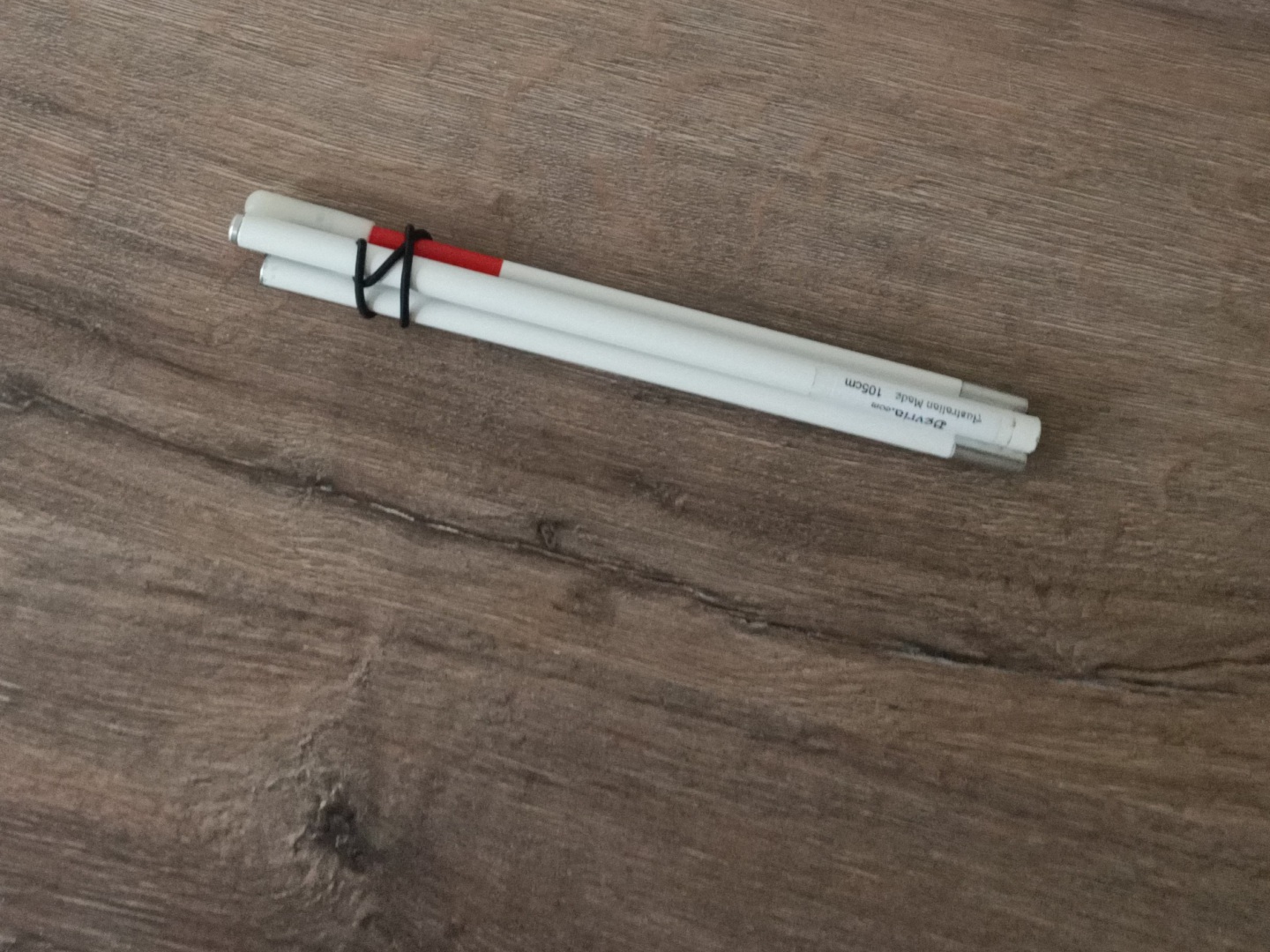
I realised I needed something else in addition to my new visual scanning techniques and that something else is something that I carry with me everywhere I go these days. It is a white vision aid stick that I hold across my body. The main reason for having the vision aid stick is to show to other people that I have a vision deficit, and pretty much 100% of the time people take notice and give me more space when I carry the stick. If you would like some more information about vision aid sticks, Vision Australia’s website is a good place to start.
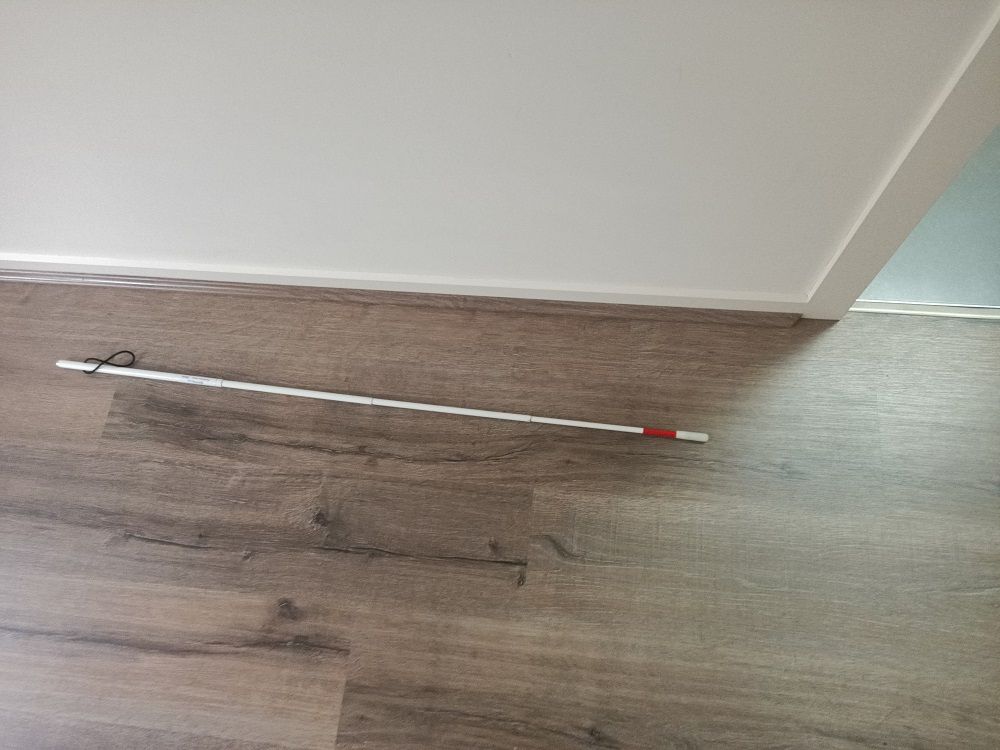
While I have learnt to adapt to this new left peripheral vision loss, of course it is still frustrating, particularly when I am a in a new environment where I am not familiar with what’s around me on the left-hand side with shopping centres, supermarkets and other busy environments being the worst for me.
Has there been any funny moments that you want to share?
There have been a couple of things actually. I met some friends and my partner for lunch one day. My partner was heading back to work and my friends were also heading off. Because I couldn’t see my partner disappear off to the left, I started talking to him, but he wasn’t there. It must have looked weird to someone standing close by.
The other thing that happens quite regularly is that I will be walking behind my partner or some friends and they turn to the left and continue walking, not realising that I did not see them turn and so I am still walking but in the wrong direction.
The other constant funny thing is how much food I can’t see on my plate and where the rest of the food ends up. In reality, I can only see the right half of my dinner plate so most of the time I get a pleasant surprise that there is a whole other part of the meal left to go. I also have to laugh at myself when I see how much of my meal ends up either on the table or on the floor because I just haven’t seen it and I have accidentally pushed it off the plate.
What about reading text on your phone and computer?
I have learnt to try to scan right across the page or text that I am looking at, otherwise I miss the first words of a sentence. The biggest struggle for me now is reading small numbers and letters. So, I often rely on my partner now to help me read information from documents or cards, like my Medicare card, or credit cards that have small numbers and letters.
There are also functions on your computer where you can ask the program to read out the text that you have just written. This makes it easier to spot mistakes.
What advice would you give other patients and carers who are experiencing the same vision loss impacts from their brain tumour?
The first thing is to be patient, it took me ages to learn the new techniques for scanning left. Also, even though it makes me feel less independent, it is so much easier for me having my partner go with me to places to point out things that I might not see coming up. Also, don’t be scared to ask for help from an occupational therapist either at your hospital or in your community or from your local guide dog association. At first, I thought how cool it would be to have a guide dog, but actually the help and advice they give you is more about those scanning techniques rather than having a dog.
The other thing that has really helped me is to explain to people, particularly when you are receiving treatment, about your vision loss so that you avoid surprises. For example, when a nurse comes and does and an inner ear temperature check on your left side, often I haven’t been able spot them until the thermometer goes in my ear.
Images for this story were provided by the author, MJ.