
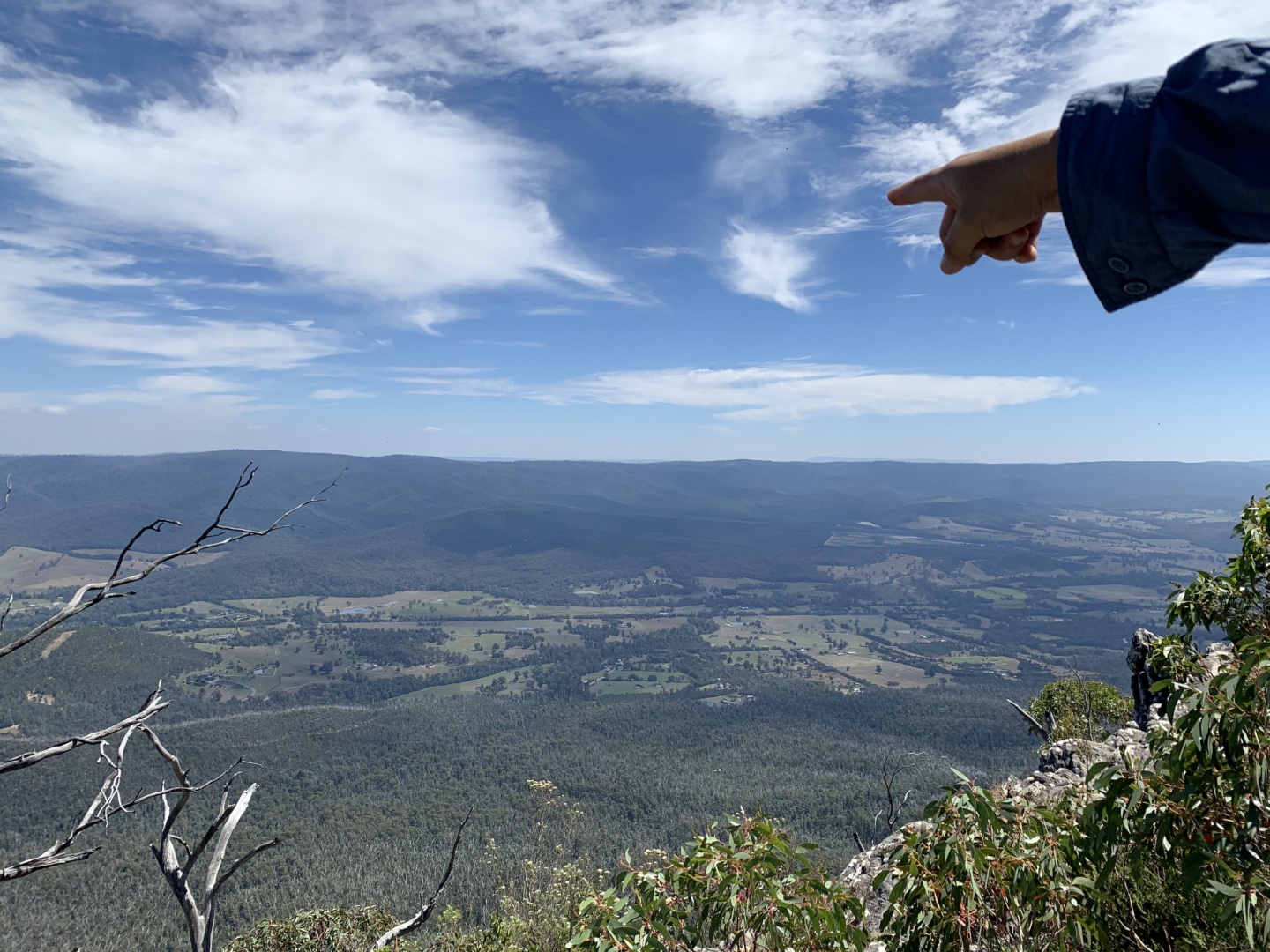
The word “journey” is commonly used by cancer patients, is this a word that rings true for you?
No, and I will tell you why. Close your eyes and think of the original explorers who went on totally new expeditions and travelled across completely unchartered waters to discover countries like Australia, New Zealand or other parts of the Pacific Island region or being the first person to conquer Mount Everest. In those days there was no Google maps or measurements of how deep the oceans are or no map of how to get to the mountain peak. I am sure these discoveries were full of moments of complete uncertainty, and fear with no idea what is coming next. To me, as a patient this is what having brain cancer is like.
I am sure health care professionals who specialize in brain cancer know what science can tell us about how to make sure that patients get the best care, I am also sure that they are trying to navigate through the expedition as well. As one of my specialists said to me recently, when your brain cancer starts growing again, we will stop and breathe and work out what to do next. So, although health care professionals might have some idea of what is coming up, each patient is so different, that I think everyone including health care professionals have their own expedition they need to travel. To lean on a cliché, it is not the destination that matters, it is about the journey of getting there. Unfortunately for brain cancer at the moment, the destination is pre-determined, but how we get there is the main thing.
What are the signposts or points of arrival have you looked out for on your brain cancer expedition?
To put it bluntly, one of the major signposts for me is that I am still alive when survival statistics tell me I shouldn’t be. In one of Adam Hayden’ blogs he made a statement that I think is so accurate for many of us that have brain cancer which is that ‘am not dead yet and that is weird’. I am sure so many of us with brain cancer have either Googled the survival statistics or have met other people with brain cancer who did not make it through and have gone on to their next life adventure.
What are you most proud about how far you have made it through your expedition so far?
Having brain cancer is tough in so many ways and I am proud of how I have found my own way to deal with the mental hurdles of going through some of the treatments as well as finding my way out of some really dark mental health moments. There is nothing like facing your own mortality that makes you really appreciate some of the basic things in life that we take for granted.
What have been the scariest parts of your brain cancer expedition to date?
While the permanent loss of my left peripheral vision and undergoing neurosurgery were scary, the most frightening part has been those days and weeks where I have felt extremely unwell where I had no appetite, no interest in getting out of bed or getting up to do my usual routines – where I had no energy to complete short a 1-2 kilometer walk or even any basic exercise. I did not recognize myself. I have had to dig really deep from my own resilience to find ways of trying to make myself feel as well as I can. I was and still am scared of losing my ability to work (even part time) and how that might translate into my ability to financially contribute to family.
Now that you are some way through your brain cancer expedition, if you could turn the clock back what advice would you give yourself before you started on your expedition?
The three bits of advice to myself would be, first forget about what you used to think about as normal in terms of physical and cognitive ability, second, this expedition is going to be scary as you are entering completely uncharted territory and there is no guidebook on what your health and quality of life should be at different time points from diagnosis, and to be willing to accept changes to your body such as having visible neurosurgery scars, hair loss from radiotherapy and changes to body shape and size due to some of the treatments you might be on such as steroids that cause weight gain to reduce swelling in the brain. And lastly because this uncharted territory also applies to your treatment team so what might work for me might not work for the next or other patients.
What would you love your treatment team to know from the patient perspective about this brain cancer expedition?
The main thing is that as a patient, it is completely frightening to be on this expedition that we did not have a choice in coming on, and that we look to you as the navigators of this scary experience. Every patient’s expedition will be different and some of us will do well on the different treatments offered to us, others will not. It is about helping us navigate the stormy waters of our health and improving quality of life and to realize that even if we come across in appointments as confident, often this is just a cover up. We are often so petrified that the ominous Jaws music is about to start playing and we are about to be swallowed up with bad news. We also want our treatment team to be as brave as we have to be, and to give us hope but also not to hold back from telling us that there are stormy waters coming, and what that means for our health and quality of life.
Image supplied by S.Bray from the BT Online team to illustrate MJ’s story.