
How it started:
It was early January 2017. I was 37, married with two children aged 18 months and three, running my own graphic design business from home, built the dream house, and generally, life was great. Out of the blue early one morning after a late night of work, my husband woke to me thrashing around in our bed. Panicking, he called the ambulance and I came to with a paramedic pricking my finger to assess my blood reading. I was confused, disorientated, and wondering why they were in my bedroom. The paramedics told him I had suffered a seizure. I was taken to the hospital and had an MRI. The news was dire, they had found a tumour on my brain. Whilst my heart sunk hearing that news, I thought, ok, this is my battle…. I never thought, ‘Why me? Why did this happen to me?’ Instead, I thought, ‘Well why not me?’. It had happened to my older sister several years ago. She was diagnosed with Leukaemia at 34. I never thought that because my sister had a diagnosis that I would be immune to being diagnosed with something. I’m just glad it’s me and not one of my kids, I really, honestly am. I know that sounds cliché to say but I cope much better knowing that it’s me.
I was immediately airlifted from Albury to the Melbourne Private Hospital. My neurosurgeon, Professor Kate Drummond, suggested because of where the tumour was located (left frontal lobe), an awake craniotomy would allow her to be more aggressive in removing as much of the tumour as possible without effecting my speech. The thought of this really freaked me out, I’d seen footage before on those medical shows and I’d shudder thinking “Imagine having to have brain surgery performed whilst being awake, I couldn’t think of anything worse!” And yet, I was about to embark on the same thing! But I needn’t have worried, on the day of the surgery you are initially sedated for the “set up” and initial incision, and then woken up a few minutes later. You are generally just having a good chin wag during the surgery along with friendly banter and jokes. They’ll get you to move your arms and just make sure that you can still talk, and when you’re beginning to get stuck on words, they’ll know enough is enough. It’s quite fascinating. You hear the sounds and pressure of the drilling and stapling up after they’re finished, but it’s like you don’t care because they give you drugs to cope with that anxiety.
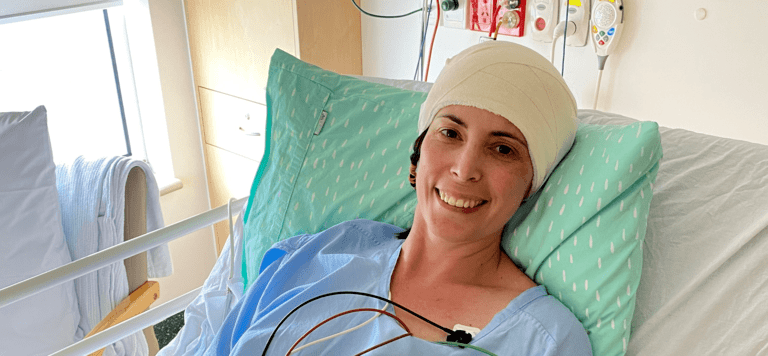
Pathology came back as a diffuse astrocytoma grade 2, I didn’t even know there were different types of tumour. I was very lucky apparently because it was considered a slow growing tumour but had the potential to transform into a higher grade. My recovery was slow and gruelling at times. I was saying to my clients, ‘I’ll be right, I’ll be back after a week.” Delusional to be thinking that! I’m very dedicated and motivated towards my business. I love it, that’s what keeps me up late at night and early in the morning and that’s what drives my husband nuts because a lot of the time he thinks I’m addicted to work and emails. I remember the first time I got back on the computer I couldn’t email. The brain messages to the hands wouldn’t work. An email would take me ages to type and there were a lot of mistakes. I was also a big shortcut person in all the software that I used for my business. When you can’t remember those shortcuts anymore, you have to search for them in the drop-down menus, so I had to retrain my brain to relearn the shortcuts. Work has been fundamental to my recovery. It’s my rehab, my distraction, and my therapy.
Recurrence:
In November 2020, after I’d just arrived back home from a walk by myself, I had a second Grand Mal seizure. Again, the ambulance was called. This time I was terrified assuming it had grown. An MRI confirmed my tumour was in fact, deemed stable. But my surgeon said to have another one in three months’ time just in case they’d missed something. In the meantime, my neurologist decided to put me on a higher dose of Keppra (anti-seizure medication).
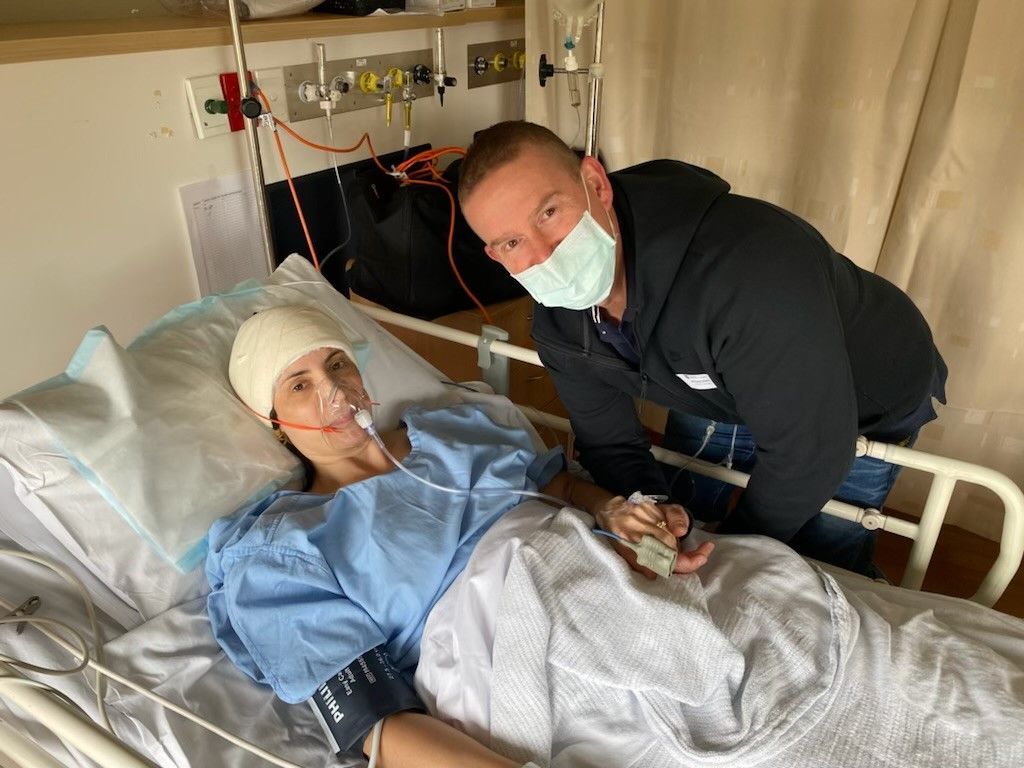
Late February in 2021, which was actually my grandfather’s 100th birthday, I felt pretty confident going into that MRI. But what was meant to be a lucky day, ended up being not so lucky. I was told there was enhancement with the contrast, and that could mean a higher grade tumour. I was scheduled for my 2nd awake craniotomy the following week. Being around family that evening for my grandfather’s 100th birthday was just what I needed. Even though my family would have been gutted, they all put on a brave face.
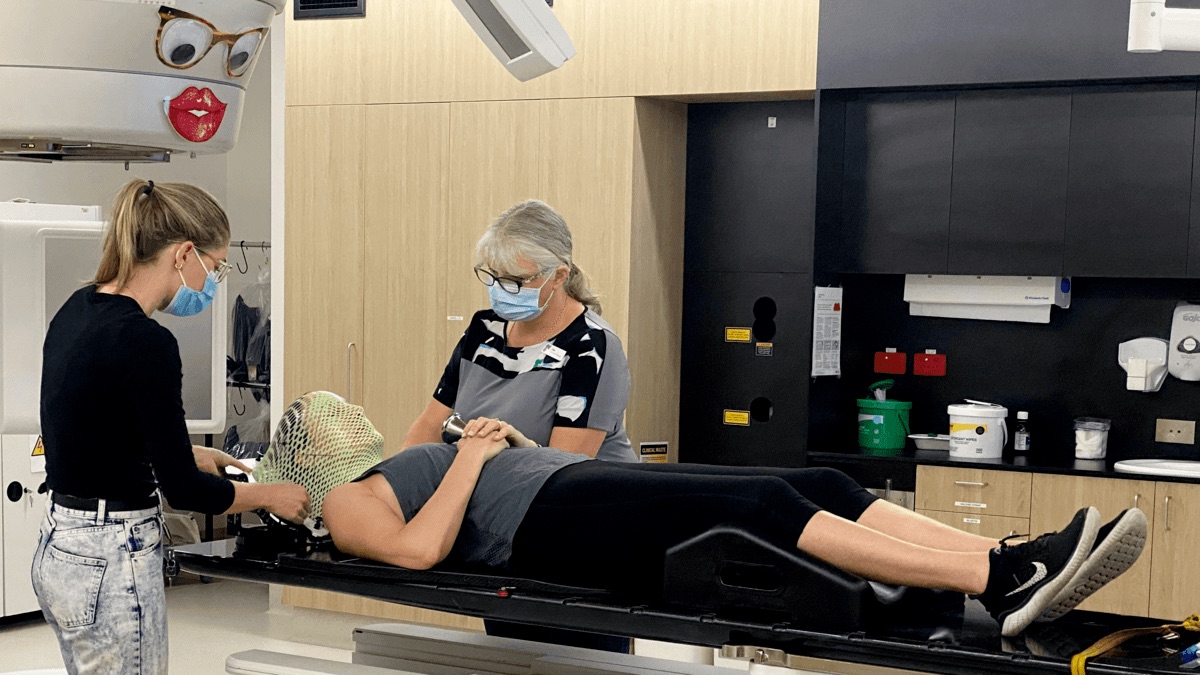
This time I wasn’t so petrified about the awake brain surgery, I was more concerned about what the pathology results would be. I recovered much sooner after my second surgery than I did my first, being discharged the day before my 42nd birthday. But pathology confirmed it was a higher grade and that I would be needing treatment this time. Six weeks of radiotherapy and 12 months of chemotherapy is the standard treatment for brain cancer, which I finished in May 2022. It was a very long and arduous 12 months, but I came out the other end. Then there was a global pandemic called Covid-19 (I don’t know if you’ve heard of it) which impacted my business, so the timing couldn’t have been better as far as my recovery during treatment, as I couldn’t have possibly kept up the pace. I’ve since upped the ante on my diet, watching what I eat, not depriving of myself of the occasional treat or glass of wine.
Living life with an astrocytoma:
As far as deficits go, I have some weakness on the right side of my body and have difficulties writing and struggle with hand/eye coordination, multi-tasking, fatigue, cognitive issues and aphasia, especially when I get tired. Severe short term memory loss is the new normal in my life. A funny story that attests just how bad my short-term memory is after surgery, I was selling a dress on Marketplace, and a lady came around and asked to try it on in my bedroom. She appeared a few minutes later wearing the dress, and I’d totally forgot that there was a random person trying something on in my bedroom! My children nickname me Dory from Finding Nemo … (Wait, what was I saying?) I also used to play squash until about a year ago when I hung up the racquet for the last time. I missed being good at it but my strength and cognitive function made it very challenging for me. And I was dropping down levels and I just wasn’t enjoying it anymore.
Maintaining a positive mindset:
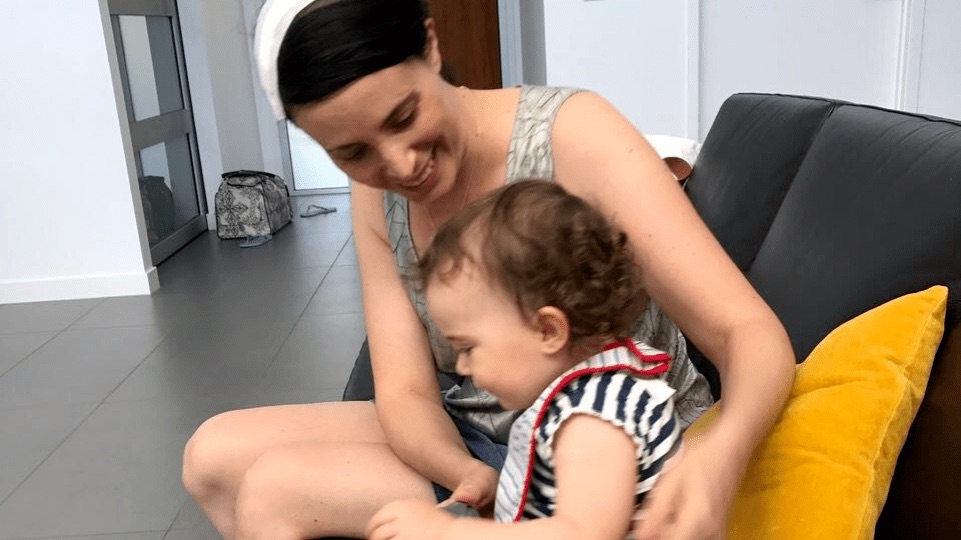
Since my recurrence, I try to practice mindfulness daily, even enrolling in a couple of mindfulness and yoga courses through our local cancer centre. My mindfulness rituals are being aware of the small moments in life, the ones we normally rush through and gloss over, truly embracing where I am at any given moment. Whether it’s being aware of sounds around you, mindful breathing, taking a shower and noticing the feeling of water falling over your body, enjoying a hot drink (or a wine) in the sunshine or in front of a fire, watching my children play, having lunch with a friend, mindful walking etc. I regret not acknowledging the many wonderful moments and good health in my life before my diagnosis. Mindfulness should be taught in schools, it’s a key life skill. I’m extremely grateful for the little things, such as being allowed to drive again. I was off the road for 6 months following my first surgery and 14 months following my second. That second stint of losing my licence was extremely difficult as I needed to rely on friends and family to take me to radiation, take my children to and from school and general medical appointments.
I used to feel incredibly guilty for not being at home working/being productive, and I soon slipped into bad habits of working late into the night after my first surgery. But after my second, I decided to stop feeling guilty (this was a gradual process) and spending more time with my family, and time for myself etc. I enjoy walking and soaking in my picturesque surroundings, body pump for strengthening, reformer pilates, and reading biographies (when I’m not too tired). I’m currently still working as a graphic designer and will do so until I can no longer work. I just don’t get as stressed about it as I once would have been.
Sources of connection and hope:
A book that I’ve read really helped my mindset too, it’s called “Difficult Gifts” by award winning author Courtney Burnett. Courtney is a physician living and working with brain cancer (also an Anaplastic Astrocytoma grade 3; AA3) in Minnesota, USA. She writes a blog called “Elephant, Lotus, Brain Tumour” and published this memoir about her experience diagnosing herself with a brain tumour quite unexpectedly at the age of 29. Her story is about finding hope and happiness despite the unexpected suffering life can bring, like a brain tumour! I found her words inspiring and reached out to her. We’ve shared our stories and both appreciate having support within the brain tumour community. I highly recommend “Difficult Gifts” to anyone going through a brain tumour journey or other unexpected difficult situation.
I’ve also been fortunate enough to attend several retreats that Peace of Mind Foundation have hosted, and some support groups that I’ve come across on Facebook, I’ve met some really good friends out of it who understand what you’re going through. Unfortunately, some friends have passed along the way too, so you must be able to cope with those. They hit you hard at the time, but I think the support from the brain tumour community far outweighs the losses along the way. I also have an amazing family and friends whose support means the world to me. I’m just sad if my children grow up without their mother so I would like to stay around for as long as I possibly can, although the odds are not in my favour, I’m determined not to let the unthinkable happen any time soon.
One of my favourite quotes is a saying from St. Francis de Sales: “Do not look forward to what might happen tomorrow; The same everlasting father who cares for you today will take care of you tomorrow and every day. Either he will shield you from suffering, or he will give you unfailing strength to bear it.”
Photos and story shared by the story author with permission for including on the Brain Tumours Online website. Original story written in July 2022, with updates made in January 2025.