
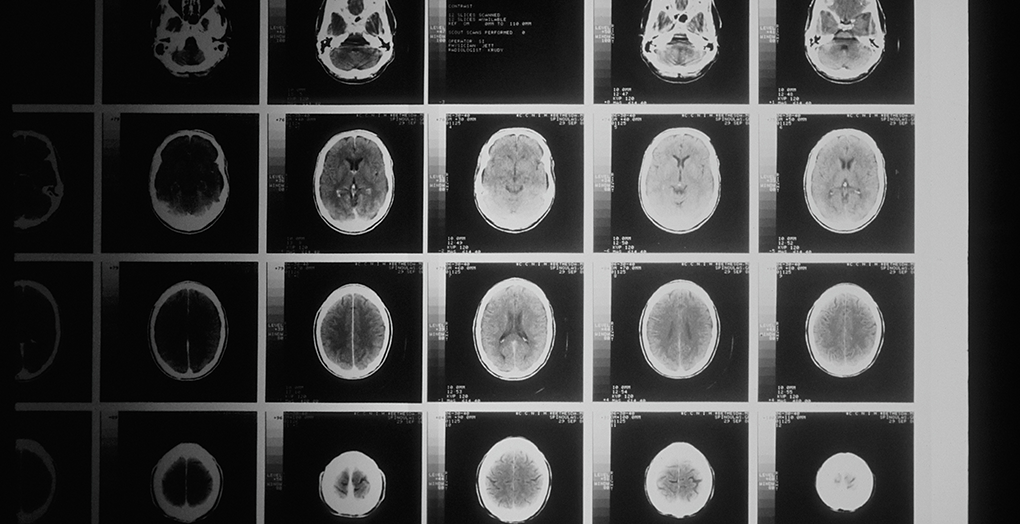
When was your first MRI and was it what you thought it would be like?
My first Magnetic Resonance Imaging (MRI) scan was in November 2019 when after an eye exam, I was sent straight to a specialist clinic to get a brain MRI. I knew a little bit about what it might be like from a friend who has them done regularly, but I had never experienced one myself. I know some people find the machines claustrophobic, but I didn’t experience that myself. Everything was a bit overwhelming at the time, so I just focused on getting through it, but I sensed that things were a bit more serious when they injected some contrast dye during the MRI. The imaging team were quick to write up their report for me to take to the GP, and that’s how my brain tumor expedition began.
How do you deal with anxiety of waiting to hear about what your MRI scan says?
In brain tumor and probably cancer land in general, this is called ‘scanxiety’ or ‘scan-anxiety’. To be honest and I am sorry to say, I still haven’t mastered the art of waiting for scan results. I have been living with my brain cancer long enough that my body, or actually my brain sometimes tells me that something isn’t quite right and there have been some MRI scans I have had where I have told my specialists and my carer that I can feel that my tumor has grown or that I can feel that there is more swelling in my brain, so I have not been surprised when that is what the MRI scan says. But there have been some scan results that have shown growth in my tumor and these results feel like a real kick in the guts not only because the tumor is growing but that I had not really anticipated that this is what the results would say.
Sometimes the MRI results can be a bit unclear, how do you deal with that?
I know that reading and interpreting scans can be a fine art and that there are many different specialists involved in reviewing the scan and what goes in the final report so when things are a bit unclear, I have trust in the team that has reviewed the scans. I know that because I am on Avastin as part my treatment, this can make scan results particularly hard to interpret, but I also know that the impact of other treatments such as radiotherapy and chemotherapy can also make the MRI scan results tricky to interpret. There is a lot of uncertainty in going through brain cancer treatment and unclear MRI results are just part of that expedition.
Do you think that MRI results are the only thing that defines how well you are?
No, and I know that one of my specialists in particular likes to assess how I am doing overall including even something as simple as how well and quickly I walk from the outpatient oncology waiting room to the consultation room can give an indication of how well I am doing.
I have heard that MRIs can be very noisy once the machinery starts up. How do you cope with that?
You are given ear plugs to put in during the MRI and sponges or pads are put around your head in the machine to help keep your head still during the scan, so at lot of the noise is blocked out. The noise comes from how the magnets in the machine react to the different frequencies. There are some parts of the scan that sound to me like keys turning in a door but one of my favorite parts is sometimes the magnets make a low bass sound which always reminds me of the start of the song ‘Jump’ by Van Halen and I have to hold myself back from playing air guitar because you are supposed to stay perfectly still during the scan.
How long does an MRI appointment last?
For the scans that I have done, the actual scan takes about 45 minutes, but the overall appointment probably goes for an hour by the time you get changed and they insert the canula into your arm vein. Something I learnt in one of my recent scans is that a particular type of canula is used for brain MRIs because the contrast dye needs to go up the veins at a particular speed or rate. For my most recent scan, the contrast dye was injected slowly at first and then more quickly.
Finally, what’s your advice to other patients who need to have regular MRI scans?
Being diagnosed with brain cancer, or probably any type of brain tumour including the need for regular scans forces you to instantly adapt. There is no choice in that. What you have control over is your own mental adaptation and adjustment. That is the rough part. In my case, because I know that I have a high-grade brain tumour, that at some point the tumour will grow or progress and that has had to be part of my mental adjustment process so understanding that that is a possible outcome that the scan will show is just part of that adjustment.
Also just try and relax as much as possible before, during and after the scan, I know that is easier said than done. Sometimes while you are having the scan, it is easy to panic yourself by thinking that the scan itself is taking longer than usual or you spot the scanning staff doing something out of the ordinary, but just try and re set your mind back to that relaxed state.
Also, a very practical tip, make sure you to go the loo before you go in for the scan, this is because you need to keep as still as possible during the scan, and there is nothing worse than busting for the toilet when you need to keep still for the duration of that scan.
Have there been any funny moments for you when having an MRI?
I have never had great hand eye coordination and for the life of me after all my hospital visits, I still can’t get the hang of which way and how I should unfold and put a hospital gown on. To this day, I will ask whether my partner can come into the changing cubicle with me to help me put the hospital gown on for me, otherwise I will put the wrong arm in the wrong sleeve and walk around with only half the gown done up.

Images used in this story are free stock images, and not images supplied by the story author.