

Before I begin my story about using Temozolomide, and now that we are heading into summer, I want you to get an image both in, and out, of your head.
Hollywood and the watermelon.
Let’s start with the Hollywood version of chemotherapy.
If you are anything like me and probably many people out there, when someone tells you that they are on chemotherapy as part of their cancer treatment, what comes to mind is those images that you might see on a Hollywood movie or Netflix show of having to be tied up with a drip to a hospital bed and then spending hours on your hands and knees in the bathroom while someone comforts you while you are throwing up. The reality of taking a chemotherapy like Temozolomide is so different.
Now let’s think about your brain as a watermelon.
You have just done your grocery shopping and you see the most beautiful looking watermelon.
When you get it home, you are shocked to see that a strawberry has magically grown inside. Well think of that watermelon as your brain and that strawberry as a brain tumour that you, or a neurosurgeon, can cut out. But you can only safely cut so much of the fruit or brain out.
But even if you can cut that strawberry out safely that’s not actually fixed the problem because the seeds of the watermelon are still there.
What often makes brain cancer so tricky to treat is that all the seeds left in the watermelon will continue to grow. That is a very grim prospect for a brain cancer patient like me whose survival time is counted in months not years.
Finding each of those watermelon seeds and killing them before they turn into deadly tumours remains one of the greatest scientific challenges to cure brain cancer.
One reason for that challenge is that chemotherapy or any other new drug needs to effectively pass through what is called the blood brain barrier which you can think of as that white layer between the hard skin of the watermelon and the fruit or brain inside.
Despite some amazing people thinking about this topic, treatment for brain cancer has not really changed in over 30 years.
The main and best ways to treat brain cancer and reduce tumour growth that our scientists have developed at this point in time are surgery, radiation targeted to where the tumour is in the brain, and chemotherapy that can get through that blood brain barrier. The most commonly available chemotherapy for treating brain cancer is called Temozolomide.
Surgery plus radiation and chemotherapy are often referred as standard of care and Australian patients are very fortunate to be able to access all three types of treatment.
Sometimes those treatments are used in sequence with each other and then in combination with each other. I have written about my experience with radiation treatment in a separate story.
For example, for a newly diagnosed glioblastoma patient, where possible, a surgeon will always try and remove the visible tumour or strawberry and then once the surgery scar has healed radiation is targeted at the tumour to kill as much of the tumour growth as possible. A high-quality scientific study has shown that this radiation treatment strategy is more effective and gives patients a longer survival time when taken in conjunction with a low dose of the chemotherapy called Temozolomide.
“If you gave me a choice of taking an evidence-based treatment such as Temozolomide or something I read about on the internet for my brain cancer, I would choose that treatment recommended by my cancer specialist each and every time, I would choose that recommended treatment every time and just learn how to manage side effects like nausea or fatigue”.
Tips for other patients and carers.
The brain cancer journey is not an easy one.
For patients, it can mean not feeling so great after surgery, radiation or chemo or most likely a combination of all three and for carers it can be so hard to watch your loved one on those days when the fatigue or just feeling miserable kicks in but my advice to both patients and carers is to keep on trucking through it.
I personally found the 6 weeks of combined radiation and low dose chemotherapy a real mental challenge which I knew I would get through it and it felt like a real achievement when I did as I knew that taking low dose Temozolomide at the same time as my radiation had proven survival benefits.
If you are really worried about how you or your loved one are feeling physically then have an open chat with your oncologist but please just don’t give up on a treatment like Temozolomide because it makes you feel crappy without talking to your oncologist first.
It has taken me a while to learn that it is actually ok to say to your oncologist, “Actually I am not feeling so well, how can you help me?” As patients and carers, we shouldn’t be afraid for being better advocates for ourselves.
So how do you actually take a chemotherapy like Temozolomide?
First Temozolomide is produced and sold in capsule format and is something you can take in the comfort of your own home. The dose of Temozolomide that you are on is often based on your weight. So, for example, if my oncologist thought I should be on a particular dose, this might equal 3 or 5 capsules that you might need to take.
An important part of taking a drug like Temozolomide is having regular blood tests to make sure that you are tracking ok. For me, the dose needed to be adjusted slightly down to make sure that all the things that doctors look for in a blood test remain within normal range. This is quite common.
I have gone from someone who hardly even took a Panadol in my life to someone who needed to be swallowing a set of tablets each day. As silly as it sounds, I have had to teach myself how to swallow pills. I think I have just about mastered it now but there are still one or two pills that still get stuck on the way down.
Is the experience the same for everyone?
Just like anything, two different people can have two different experiences of a particular medicine. Some people tolerate Temozolomide really easily and some people find that the side effects are quite strong for them.
Once you start on the monthly cycles of Temozolomide, you take it for 5 days on and then 23 days of “holiday”, this often gets referred to as the “5/23” routine. For me I started noticing a pattern that the first few days I felt fine but by day 5, I really started to feel not as good and by day 7 I just felt wiped out. That feeling would stick around for a couple of weeks and sometimes I would only feel back to normal by the start of the next monthly cycle.
My advice to any patients and carers when taking something like Temozolomide is to make your own little diary of how you are feeling and what kind of side effects are better or worse on particular days of 5/23. This can really help in two ways. First it can help you measure what is the “new normal” and second it can really help when you have regular check-ups with your oncologist.
Two of the common side effects of Temozolomide are nausea and fatigue. The time of day and planning what and when you eat are key things that you and your carer have in your control to limit the nausea effect. Your oncologist will also prescribe anti-nausea medication that you should have before you take your Temozolomide. Keeping the timing of your food and Temozolomide medicine will also help a great deal. Speaking of regular, the anti-nausea medicine can cause constipation but this is much more easily dealt with than the nausea effect of the chemotherapy. I was sick only once during my 6 weeks of radiation and chemotherapy and that was because of a little bit of swelling on my brain due to the radiation, it was definitely not the hours over the toilet bowl that the movies make chemo out to be.
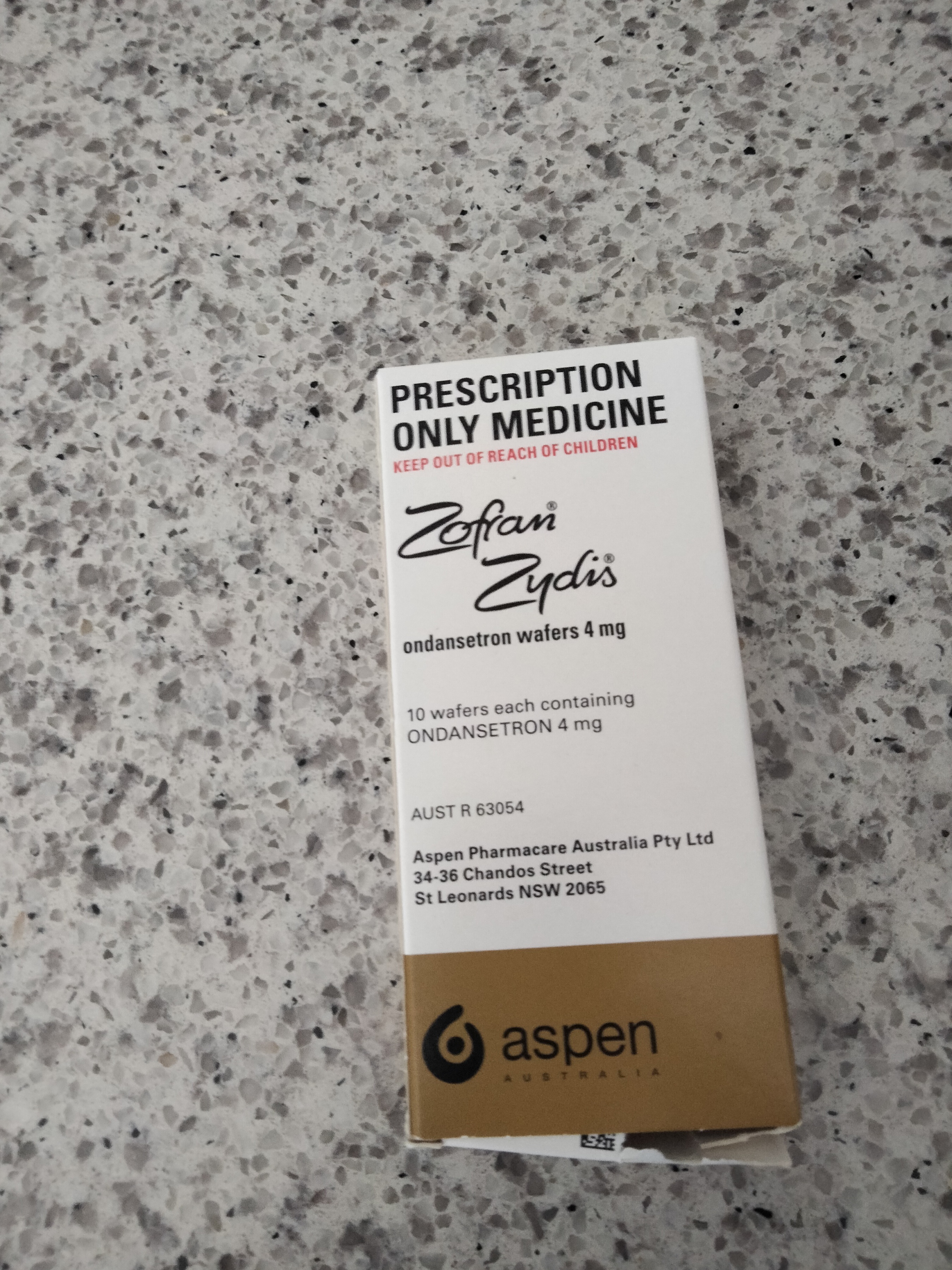
Probably the hardest side effect is a really big sense of fatigue that can build up, particularly as you complete each monthly cycle. This will differ for each person but for me it felt like I had been out partying the night before but without the party. Your cancer treatment centre can give you strategies about how to manage this kind of fatigue.
“Gratitude and positivity”.
I have chosen to take a positive mindset to living with brain cancer and I count myself very lucky that I am able to access this evidence-based and multi-disciplinary standard of care through Australia’s health care system. I think as patients and families it is so easy to take for granted what we have on our front door.
As a patient who has been prescribed and has benefited from Temozolomide, I am also grateful for those specialists and community and patient advocates before me that have paved the way for this drug to be funded through the Pharmaceutical Benefits Scheme with only a small co-payment to patients. Many other people do not get this level of access to a drug that can give a patient like me more time.
I know that drugs like Temozolomide won’t cure my cancer and they might make me feel like I have a bit of a hangover but if that drug can stop or slow at least some of those watermelon seeds growing into new tumours then that is an amazing outcome for patients like me, but as patients, carers and scientists we need so much more. I hope that in my lifetime, we can find something that takes brain cancer from a non-curable and most devastating cancer to a cancer where the chances of survival are so much greater. In the meantime, chemotherapy drugs like Temozolomide are so important to me and many other brain cancer patients.
While drugs like Temozolomide are benefiting many brain cancer patients like me, we still need a game changer to really make brain cancer something that every patient can survive and that we don’t need to say goodbye to each of the friends we meet along our brain cancer journey.
The image for this story was provided by the author, MJ.